
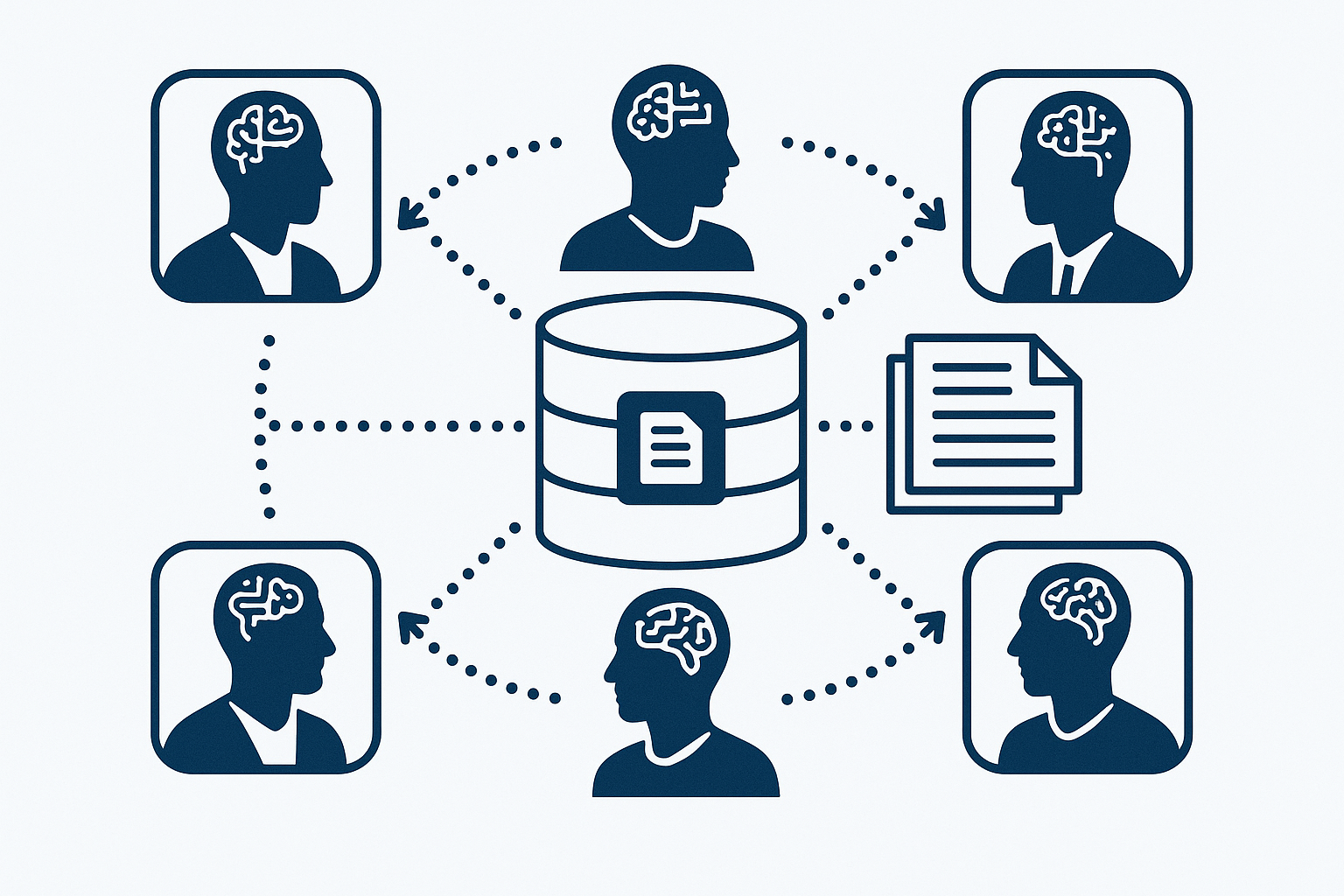
SAP Embraces CrewAI: Building Enterprise AI Agents with RAG
SAP just launched its April 2026 AI Developer Challenge, and the tech stack is telling: CrewAI for multi-agent orchestration, combined with SAP’s Generative AI Hub for RAG-powered document grounding. This isn’t a toy demo—it’s a signal that enterprise AI is moving decisively toward agentic architectures.
The Challenge: Real-World AI for Social Services
The four-week challenge tasks developers with building an intelligent assistant for German social welfare services (“Grundsicherung”). The system must:
- Answer questions about social benefits using grounded documents
- Find information about food banks (“Tafel Deutschland”)
- Make decisions about when and how to retrieve context
- Provide accurate, context-aware responses
This is classic enterprise AI territory: domain-specific knowledge + complex queries + accountability requirements.
Why CrewAI + RAG Matters
The combination SAP chose is significant:
CrewAI: Role-Based Multi-Agent Teams
CrewAI structures AI as collaborative teams with defined roles, goals, and backstories. Instead of one monolithic prompt, you get:
- Specialized agents — each focused on a specific task
- Task delegation — agents hand off work appropriately
- Structured outputs — predictable, typed responses
For enterprises, this means auditability. You can trace which agent made which decision and why.
RAG: Knowledge-Grounded Responses
Retrieval-Augmented Generation solves the hallucination problem by grounding LLM responses in actual documents. SAP’s implementation uses:
- SAP HANA Cloud Vector Engine — enterprise-grade vector storage
- Document Grounding Service — handles chunking and embedding
- Orchestration Workflow — coordinates retrieval + generation
The result: AI that answers based on your documents, not its training data.
The Four-Week Curriculum
SAP structured the challenge as progressive skill-building:
| Week | Focus | Key Skills |
|---|---|---|
| 1 | Document Grounding | RAG patterns, prompt templates, orchestration service |
| 2 | CrewAI Agents | Roles, goals, tasks, SAP AI Hub integration |
| 3 | Agents + Tools | Custom tools, tool-based reasoning, RAG + agents |
| 4 | SAP-RPT-1 | Foundation model for regression/classification |
Week 3 is the interesting one: combining agentic decision-making with grounded retrieval. This is where agents learn to decide when to fetch context vs. when they already have enough information.
Architecture Deep Dive
SAP’s reference architecture reveals enterprise-grade thinking:
User Query
    ↓
Orchestration Workflow (SAP AI Core)
    ↓
┌─────────────────────────────────────┐
│  1. Query Analysis (LLM)            │
│  2. Similarity Search (HANA Vector) │
│  3. Context Retrieval (S3/DocStore) │
│  4. Response Generation (LLM)       │
└─────────────────────────────────────┘
    ↓
Grounded Response
Key components:
- SAP AI Launchpad — UI for managing deployments
- Generative AI Hub — unified access to multiple LLMs (Gemini, Azure OpenAI, Bedrock)
- HANA Cloud Vector Engine — cosine similarity search at scale
- Document Store (S3) — source document management
What This Means for Enterprise AI
1. Agentic is Going Mainstream
When SAP builds a developer challenge around CrewAI, it’s not experimental anymore. Expect enterprise tooling to assume multi-agent architectures.
2. RAG is Table Stakes
Document grounding isn’t optional for enterprise AI. Every serious implementation needs retrieval to ensure accuracy and reduce liability.
3. Tool Use is the Differentiator
The most capable enterprise agents will be those that can decide when to use tools (search, APIs, databases) vs. relying on context. Week 3’s focus on “tool-based reasoning” is where production value lives.
4. Hybrid Cloud is Reality
SAP’s architecture spans BTP, HANA Cloud, AWS S3, and external LLM providers. Enterprise AI means orchestrating across platforms.
Getting Started
SAP is offering free trial access to their full stack:
- Register for trial access
- GitHub repo with notebooks
- Work through weekly challenges in Business Application Studio
Prerequisites are minimal: basic Python, Jupyter familiarity, REST API concepts.
Key Takeaways
- CrewAI is SAP’s choice for multi-agent orchestration — role-based teams with clear accountability
- RAG + Agents is the production pattern — grounded knowledge meets autonomous decision-making
- Enterprise architecture requires vector databases, document stores, and multi-cloud orchestration
- Tool-based reasoning separates demos from production systems
The combination of agentic AI and retrieval-augmented generation isn’t just technically elegant—it’s the architecture that makes enterprise AI trustworthy enough to deploy.
Virge.io specializes in enterprise AI architectures combining RAG, multi-agent systems, and secure orchestration. Contact us to discuss your implementation.