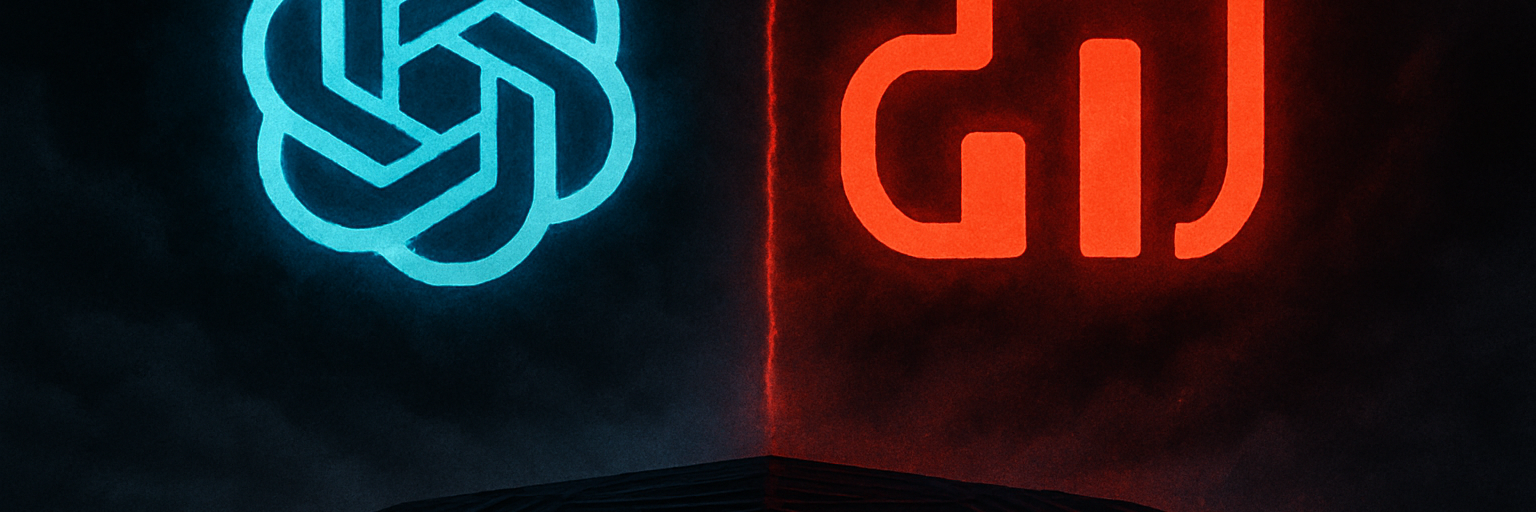
On Friday, February 27th, 2026, the AI industry had its most dramatic day yet.
President Trump ordered every federal agency to immediately cease using Anthropic’s technology. Defense Secretary Pete Hegseth designated Anthropic a “supply chain risk to national security” — a label typically reserved for foreign adversaries. Hours later, OpenAI announced it had signed a deal with the Pentagon to deploy its models on classified networks.
The speed of it all was breathtaking. But the underlying story is more nuanced — and more important — than the headlines suggest.
What led to the ban
For months, Anthropic had been negotiating a contract with the Pentagon worth up to $200 million. Anthropic was actually the first AI lab to deploy models on the DoD’s classified network. But the negotiations hit a wall over two specific restrictions Anthropic wanted in the contract:
- No fully autonomous weapons. Anthropic argued that current AI models aren’t reliable enough to make life-or-death decisions without human oversight.
- No mass surveillance of American citizens. Anthropic considered this a fundamental rights issue.
The Pentagon wanted unrestricted access across all “lawful use cases.” Anthropic wouldn’t budge on these two points. The Pentagon set a deadline. Anthropic missed it. Trump posted on Truth Social. Hegseth followed with the blacklist designation.
The OpenAI deal
Hours after Anthropic’s blacklisting, Sam Altman announced OpenAI had reached an agreement with the Pentagon. Here’s the twist: OpenAI’s deal includes the same restrictions Anthropic was asking for.
From Altman’s post on X: “Two of our most important safety principles are prohibitions on domestic mass surveillance and human responsibility for the use of force, including for autonomous weapon systems. The DoW agrees with these principles, reflects them in law and policy, and we put them into our agreement.”
Read that again. The Pentagon agreed to the exact same guardrails with OpenAI that it refused to accept from Anthropic.
Altman even asked the DoD to offer the same terms to all AI companies — including, implicitly, Anthropic.
What this tells us
1. AI safety positions are now political
Anthropic has positioned itself as the “safety-first” AI company since its founding. That positioning — combined with reports of employees donating to Democratic campaigns — made it a political target. Government officials had been criticizing Anthropic for months for being “overly concerned with AI safety.”
The irony: OpenAI got the same safety terms without the political baggage.
2. The “supply chain risk” designation is unprecedented
This label is designed for foreign adversaries — companies like Huawei or Kaspersky. Using it against a domestic AI company sets a new precedent. Anthropic has announced it will challenge the designation in court, arguing the Defense Secretary doesn’t have the authority to extend the blacklist beyond DoD contracts to all military contractors’ other business.
3. Vendor lock-in just became a national security conversation
Every company using Anthropic’s Claude in products that touch government contractors now has a problem. The blacklist means DoD vendors must certify they don’t use Anthropic’s models — potentially affecting their entire product stack, not just government-facing work.
This is a wake-up call for any business building on a single AI provider.
What this means for businesses
Whether you’re using OpenAI, Anthropic, Google, or open-source models — this week changed the risk calculus:
Diversify your AI providers
If your entire stack depends on one AI company, you’re one executive order away from a crisis. Build abstraction layers. Support multiple models. Make switching possible.
This is something we’ve been advocating at Virge.io for a while. Our OAuth 2.0 architecture is built on standards precisely because vendor lock-in is a business risk. The same principle applies to AI: build on interfaces, not implementations.
Understand your supply chain
If you’re a government contractor — or if your clients are — you now need to audit your AI dependencies. Which models power your search? Your content generation? Your analytics? If any of them touch Anthropic, you have six months to transition.
Safety terms matter in contracts
The fact that OpenAI negotiated safety guardrails into a Pentagon contract shows that these aren’t just ethical positions — they’re contractual terms. When you integrate AI into your products, the terms of use aren’t just legal boilerplate. They define what your product can and cannot do.
European businesses: watch closely
The EU’s AI Act already imposes restrictions on high-risk AI applications, including military use. The US government effectively punishing a company for wanting restrictions on military AI creates a fascinating tension with European regulatory approaches. If you operate in both markets, your AI governance needs to account for both.
The bigger picture
Anthropic tried to set boundaries on how its technology could be used by the most powerful military in the world. It got blacklisted for it. OpenAI asked for the same boundaries and got a contract.
The difference wasn’t the policy — it was the politics.
For the AI industry, this is a watershed moment. The question is no longer just “what can AI do?” but “who gets to decide what AI does?” — and that answer is increasingly political.
For businesses building with AI: the lesson is clear. Don’t depend on any single provider. Build flexibility into your architecture. And pay attention to the terms — because in 2026, they can change overnight.
Need help building AI architectures that are provider-agnostic and future-proof? That’s what we do.